God's Word
Expository teaching, Bible studies, and faithful translation work rooted in Scripture alone — Sola Scriptura — the principle Jan Hus died defending at Constance.

Czech Protestant heritage · For the nations
From the missionaries who gave the Slavs Scripture in their own tongue, to Jan Hus at the Bethlehem Chapel, to the Unity of the Brethren who gave Bohemia the Bible kralická — we stand on the shoulders of Czech believers who counted everything loss for Christ.
Koinonia — koinōnia, fellowship — is communion with God and one another for the sake of the world. We exist to proclaim Christ, equip the church, and send the Gospel where it is needed most — carrying forward a Czech legacy that insisted on Scripture in the language of the people, a full century before Luther nailed his theses to Wittenberg.
"Go therefore and make disciples of all nations, baptizing them in the name of the Father and of the Son and of the Holy Spirit, teaching them to observe all that I have commanded you." — Matthew 28:19–20 (ESV)
Expository teaching, Bible studies, and faithful translation work rooted in Scripture alone — Sola Scriptura — the principle Jan Hus died defending at Constance.
Gathering believers in spirit and truth — honoring centuries of Czech hymnody, from the Unity of the Brethren to the psalms sung in hidden barn-churches after White Mountain.
Local outreaches, assisting churches and individuals, and sending workers to the nations with the Gospel of Jesus Christ.
Pray, support, participate, and partner — expecting fruit that stores up treasure in heaven.
Long before Luther, the Czech lands were already wrestling with what it means to follow Christ faithfully — Scripture in the language of the people, communion in both kinds, a church that answers to God before empire. That fire never went out. It runs from Great Moravia through Hus, the Unity of the Brethren, the Bible kralická, and the hidden church that survived White Mountain.
The Czech story of faith begins not in Germany, but in Great Moravia. In 863, the brothers Cyril and Methodius arrived with the Glagolitic alphabet and the Gospel translated into Old Church Slavonic — the first time Slavic peoples heard God's Word in a tongue they could understand. When Methodius died and Latin pressure returned, the Czech lands did not forget: the Bible belongs in the language of the people.
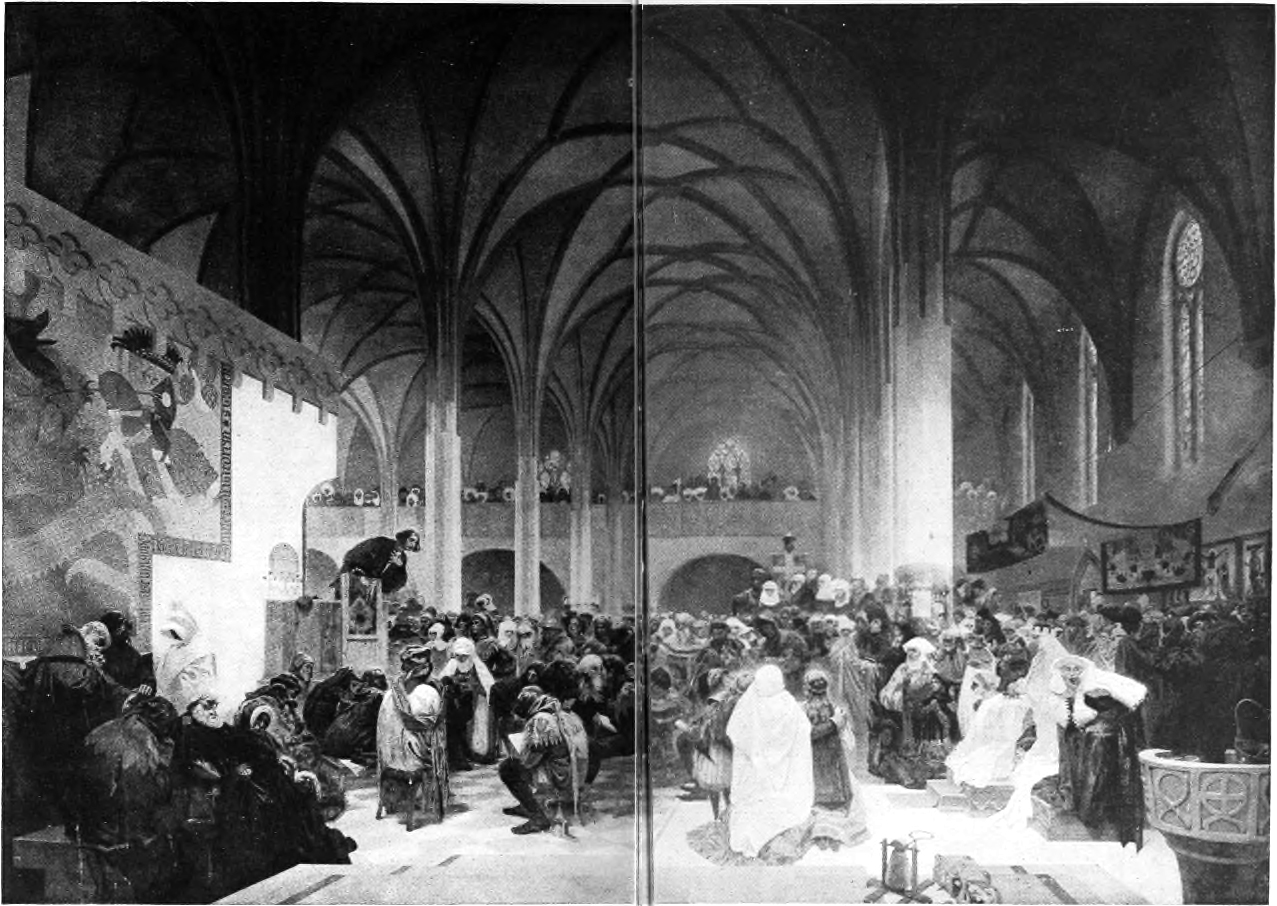
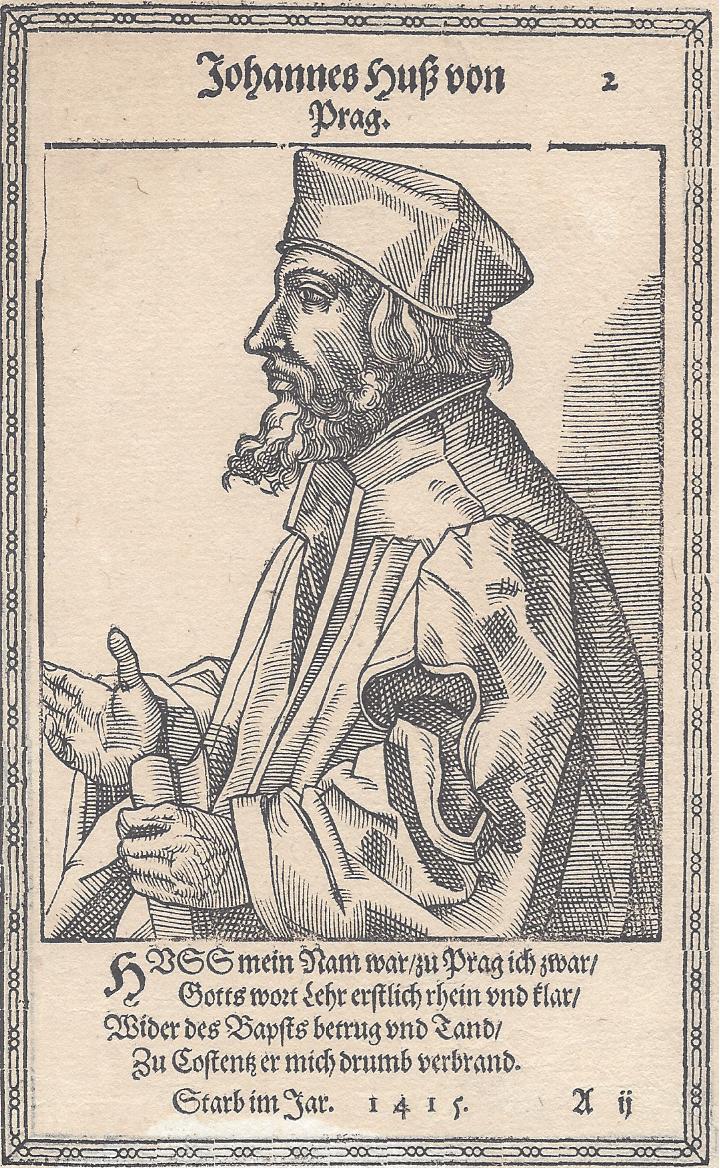
Five centuries later, Jan Hus — rector of Charles University and preacher at the Bethlehem Chapel in Prague — took up that same conviction. Hus insisted that Christ, not the pope, is head of the church; that Scripture is the supreme authority; and that the Mass must be preached in Czech so ordinary believers could understand. He was burned at Constance on July 6, 1415. His followers called themselves Husites — and the Czech Reformation had begun.
"Seek the truth, listen to the truth, learn the truth, love the truth, speak the truth, defend the truth unto death." — Jan Hus (attributed), martyred at Constance, 1415
After Hus's death, the Czech estates united around four demands — a confession of faith a full century before Luther's 95 Theses:
The Gospel must be preached freely in Czech — without papal censorship, without Latin obscurity. Every believer has the right to hear Scripture in their own tongue.
Laity as well as clergy receive the cup at the Lord's Table (sub utraque). The chalice became the symbol of the Hussite movement across Bohemia and Moravia.
Church leaders must not hoard wealth or wield political power. Christ's servants are called to humility, not princely estates.
Public sin — especially by those in authority — must be corrected. Holiness is not optional for those who lead God's people.
The Hussite wars (1419–1434) shook Central Europe. Led by commanders like Jan Žižka, Czech defenders fought for religious freedom and the Four Articles. At the Battle of Lipany (1434) the radical Taborite wing was defeated, but the Utraquist church — taking communion in both kinds — remained the majority faith in Bohemia for generations.
In 1457, in the village of Kunvald in eastern Bohemia, survivors of the persecuted Bohemian Brethren formed the Jednota bratrská — the Unity of the Brethren. They rejected worldly power, emphasized personal piety, educated children in Czech, and committed themselves to translating Scripture faithfully. Under leaders like Lukáš Pražský and later Jan Amos Komenský (Comenius), they became the most literate and biblically grounded community in Europe.
Jan Blahoslav completed the first Czech New Testament from the original Greek in 1564. Then, between 1579 and 1593, the Brethren's press at Kralice nad Oslavou published six volumes of the Old Testament from Hebrew — the Bible kralická. The 1613 revision became the definitive Czech Protestant Bible for nearly four hundred years: bibličtina, the sacred language of Czech worship.
Slavic missionaries translate Scripture into Old Church Slavonic and celebrate worship in the vernacular — planting the seed that Scripture belongs in the language of the people.
A chapel dedicated to preaching in Czech — not Latin. Jan Hus becomes its preacher and rector of Charles University, calling Bohemia back to the authority of Scripture.
Despite a promise of safe conduct, Hus is burned alive for heresy. July 6 becomes a day of remembrance. Jerome of Prague follows him to the stake in 1416. The Czech Reformation does not die — it ignites.
The Czech estates formally confess: free preaching of the Word, communion in both kinds, a poor clergy, and punishment of public sin — a Reformation program before Luther.
Persecuted Bohemian Brethren form the Jednota bratrská — committed to Scripture, Czech education, simple worship, and faithful Bible translation.
Jan Blahoslav publishes the first complete Czech New Testament translated directly from Greek — a foundation for the Kralice Bible.
Czech Protestant estates present a confession of faith to Emperor Maximilian II — asserting the legal rights of Lutherans, Calvinists, and Brethren in the Czech Crown.
The Unity of the Brethren publishes the first full Czech Bible from Hebrew and Greek. The 1613 edition — the Bible kralická — serves Czech Protestants for nearly four centuries.
Emperor Rudolf II grants the Bohemian estates freedom of religion. Protestant churches flourish; Czech is the language of worship, preaching, and Scripture.
Catholic Habsburg forces defeat Czech Protestant armies outside Prague. The Counter-Reformation begins. Ferdinand II revokes the Letter of Majesty.
Twenty-seven Czech Protestant noblemen and leaders — including Jan Jeseniús, rector of Charles University — are publicly executed in Prague. Their heads are displayed on the Charles Bridge.
The Renewed Land Ordinance (1627) forces Czech nobles to convert or flee. The Unity of the Brethren is driven underground and into exile. Jan Amos Komenský (Comenius), last bishop of the Unity, dies in Amsterdam (1670) believing the church would rise again. Descendants of Czech Brethren refugees establish Herrnhut (1722) — seeding the global Moravian Church and its worldwide missionary movement.
Emperor Joseph II grants limited worship rights to non-Catholic Christians in the Habsburg lands. The hidden Czech Protestant church can breathe again — but the memory of martyrs is never forgotten.
With the birth of Czechoslovakia, Protestant churches emerge from centuries of restriction. The Czech nation reclaims its Reformation heritage — and the Bible kralická remains the sacred text of Czech Protestant memory.
From Cyril and Methodius to Hus to the Brethren, one conviction runs through Czech history: God's Word must be heard and read in čeština. The Bible kralická is not a foreign import — it is the Czech people's own Bible.
Luther read Hus. The Bohemian reformer was condemned a century before Wittenberg — yet his insistence on Scripture, vernacular preaching, and the cup for the laity shaped all of Protestant Europe.
When the Czech church was driven underground, believers memorized Psalms from the Kralice Bible in secret. When the Brethren were exiled, their descendants carried the Gospel to every continent through the Moravian missions — from Herrnhut to the Caribbean, Africa, and the Americas.
Koinonia Ministry stands in this lineage: returning Scripture to the Czech people in the language their martyrs died to preserve — faithful to the 1613 foundation, renewed for a new generation. A Slovak derived edition may follow later; the first work belongs to Czech.
For nearly two centuries after White Mountain, the Czech Protestant church did not grow in comfort. Believers in Bohemia and Moravia paid in blood, exile, and silence — yet they would not let go of the Kralice Bible or the name of Christ.
On November 8, 1620, Catholic Habsburg armies crushed the Czech Protestant estates at the Battle of White Mountain — a hill overlooking Prague. Within months, Emperor Ferdinand II revoked the Letter of Majesty that had guaranteed religious freedom. The Counter-Reformation descended on Bohemia and Moravia with brutal force.
On June 21, 1621 — the Day of Blood — twenty-seven Czech Protestant noblemen and leaders were beheaded on Prague's Old Town Square. Among them was Jan Jesenius, rector of Charles University, and Václav Budovec, a nobleman who had defended the Bohemian Confession. Twelve of their heads were impaled on the Charles Bridge as a warning. Protestant churches were confiscated, Brethren printing presses destroyed, and the Unity of the Brethren driven into exile across Poland, Prussia, and the Netherlands.
The Renewed Land Ordinance of 1627 required Czech nobles to profess Catholicism or forfeit their property. An estimated 150,000 Czech Protestants fled their homeland. Those who remained worshiped in secret — in barns, forests, and private homes — memorizing Psalms from the Kralice Bible, baptizing children in hidden ceremonies, passing the faith father to son in whispered Czech.
Jan Amos Komenský (Comenius), the last bishop of the Unity of the Brethren, died in Amsterdam in 1670, still believing the "hidden seed" would one day bloom again. It did — in Herrnhut (1722), where descendants of Czech Brethren refugees kindled a missionary fire that reached the ends of the earth. And in 1781, Emperor Joseph II's Toleration Patent allowed Czech Protestants to worship openly once more.
Koinonia Ministry International stands in this lineage: unashamed of the Gospel, committed to Scripture in the Czech tongue, and willing to serve wherever Christ sends us.
"The church of the Brethren, which was driven into the wilderness, will return and flourish again." — Jan Amos Komenský (Comenius), last bishop of the Unity of the Brethren, 1670
"They overcame him by the blood of the Lamb and by the word of their testimony; they did not love their lives so much as to shrink from death." — Revelation 12:11 (NIV)
Explore the Reformation heritage through documentary and educational resources. All embedded media is used for non-commercial ministry education.
The reformer whose faith ignited a movement across Bohemia and Moravia — a century before Luther.
How the Gospel took root in Czech university towns and Brethren villages — and why Luther himself acknowledged the debt Europe owed to Jan Hus.
Historical images from Wikimedia Commons; educational videos hosted locally for reliable playback.
From Bible translation to expository teaching and sacred art — we invest in work that outlasts a single generation.
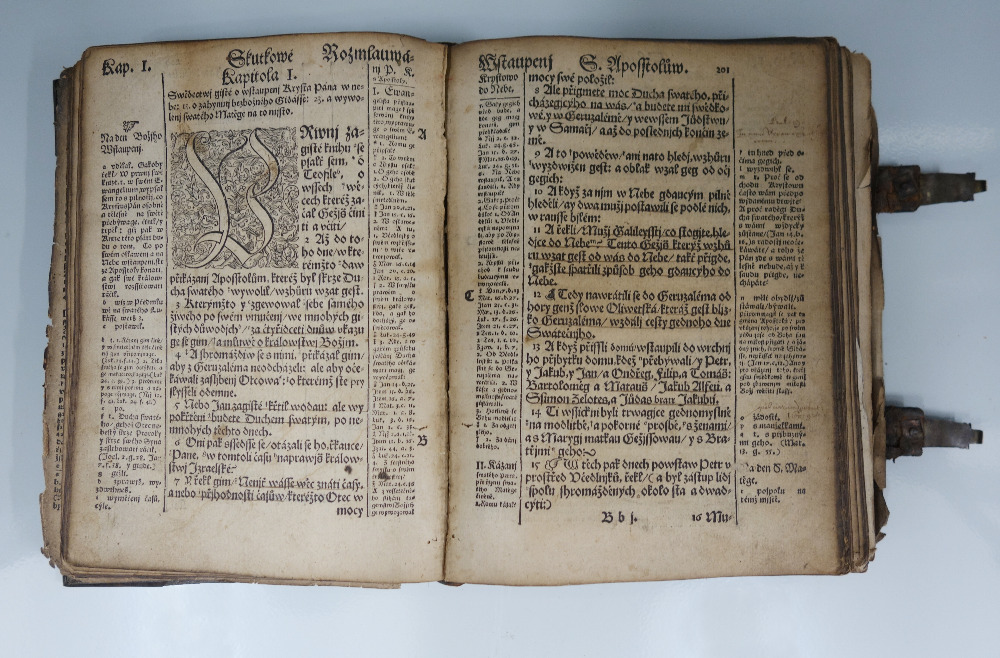
The Bible kralická (Kralice Bible) stands at the center of Czech Protestant identity. Jan Blahoslav translated the New Testament from Greek in 1564. Then, between 1579 and 1593, scholars of the Unity of the Brethren — working from the printing town of Kralice nad Oslavou in Moravia — completed the Old Testament from Hebrew. The 1613 revision became the definitive Czech Bible for nearly four centuries: the Scripture read in Czech churches, memorized in hidden worship, and carried into exile by those who fled White Mountain.
This was never a Slovak text. It was written in bibličtina — the sacred Czech of the Brethren — for the Czech people of Bohemia and Moravia. Koinonia Ministry International is working diligently to rebuild and rewrite this Bible in Czech, as it was originally given. The first revised edition belongs to the Czech language. A Slovak derived edition may follow later as an optional companion. It is coming soon.
Verse-by-verse preaching and teaching that feeds the church — online and in person — building disciples who know and love the whole counsel of God.
Visual and musical resources that connect contemporary worship with the rich artistic heritage of Czech Protestantism — from Brethren hymnals to the sacred art of the Hussite and Baroque eras.
Supporting local congregations and individuals — Bible studies, mission outreaches, and practical partnership in the work of the Gospel.
Koinonia Ministry is working diligently to rebuild and rewrite the Bible kralická in Czech — the sacred Scripture their ancestors read for nearly four hundred years. Below is a preview of the original 1613 Czech text (bibličtina) we are faithfully rebuilding. The complete interactive reader in Czech is coming soon.
🎉 Completed books: 2 John (2. Janův), 3 John (3. Janův), Philemon (Filemonovi), Jude (Judův), Titus (Titovi), 1 Thessalonians (1. Tesalonickým), 2 Thessalonians (2. Tesalonickým), 1 Timothy (1. Timoteovi), 2 Timothy (2. Timoteovi), Colossians (Koloským), Philippians (Filipským), Ephesians (Efeským), and Galatians (Galatským) — read the full Nová Verze Bible Kralické text below, in Czech or Slovak.
Nová Verze Bible Kralické · Modernized Czech (2026)
Historic Source Text · Bibličtina (1613)
English Parallel · King James Version
We are diligently rebuilding and rewriting the Bible kralická in Czech. Be the first to know when the full interactive reader — all 66 books, searchable, with study notes — is ready. Coming soon.
This demo displays sample passages from the public-domain 1613 Kralice Bible — the historic Czech text (bibličtina) Koinonia Ministry is faithfully rebuilding in the Czech language. English parallel from the public-domain King James Version (1769). Full Czech edition coming soon.
Donate Now — Support the Czech BibleWhether around a table studying Scripture or on the streets sharing the love of Christ — koinonia happens wherever believers gather in His name.
In-depth study of God's Word — exploring the Old and New Testaments with reverence for the traditions of faithful expository preaching.
Meeting practical needs and proclaiming the Gospel in neighborhoods, prisons, and communities that need the hope of Jesus.
Assisting pastors and congregations with teaching, worship, and encouragement — strengthening the body of Christ for the work of ministry.
Pray for us. Partner with us. Support Bible translation, outreaches, and teaching that reaches nations. Every gift joins a legacy of believers who gave everything for the name of Jesus.
Send us a message and we'll get back to you as soon as we can. Whether you'd like prayer, want to partner with the ministry, or have a question about the Bible Kralická project — we'd love to hear from you.
info@koinoniaministry.orgWatch teachings, connect on social platforms, and help spread the Gospel by sharing this site with your church, family, and friends.
This site is built to be usable by people of all abilities. Accessibility here is work done on the site's own code — not a widget layered on top of it.
We target WCAG 2.2 Level AA, the standard referenced by the ADA and Section 508. As of 28 July 2026 this site is partially conformant: it meets that standard everywhere we have been able to test it, and the testing we have not yet done is listed below.
We do not claim this site is free of accessibility barriers, and no site can honestly promise that. If you hit one, we want to know.
Email info@koinoniaministry.org — you do not have to use the contact form. Tell us what you were trying to do and what happened. We aim to reply within five business days, and to offer another way to get what you needed while we fix the underlying problem.
This statement describes testing carried out on 28 July 2026 and is reviewed by 28 January 2027. It is a description of our work, not a legal determination, and it does not certify compliance with any statute.